Foam shapes are such a fabulous tool to get children to count, learn shapes/colors and to build their imagination.
My main objective for the kids while doing this activity was to help them to count but it brought out many other aspects of learning and that made me very glad.
I simply gave children some foam shapes and asked them to create something out of it. They used their creativity and made many designs.
I encouraged them to copy their designs on paper because I wanted to record it but you can eliminate this step if you like.
After they finished making their designs (give them plenty of time to complete), I asked them to count the shapes used in making the designs. Some of them even recorded the number.
A transformer!
A bow!
A BMW!
A lion!
If you note, children even attempted to write what they had made. So we were able to incorporate literacy too!
It is a simple activity with no preparation but brings out beautiful results. Do try it out with your class.
I was going through some of my old posts and found a frog game that I used to play in my class quite often to teach children count on and addition and I realized that I haven't done a post on numeracy for a long time. So I took some inspiration from that game and created a fun pack to practice addition with frogs.
It has small group and large group activities that children can engage in. It has something for your musical learners, for your kinesthetic learners and for your visual learners. Its a fun hands-on pack which will get your little mathematicians excited about doing addition.
The following snapshots are from the pack:
Few samples of the worksheets:
Grab this pack from my TPT STORE and have some froggy fun!
Who loves board games? I do ! and it sure brings back childhood memories. Monopoly, scrabble, snakes and ladders were just a few games that added fun to our evenings and gave us time to bond as a family. But now a days, thanks to all the technical devices, kids don't really understand the meaning of playing with others, taking turns and waiting for their turn.
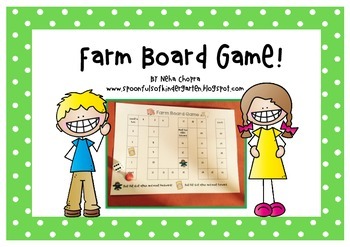
So i decided to whip up a quick board game for one of my kids, not only to teach him an academic concept but also some other important skills. And boy oh boy, it did turn out great!
We practiced numbers with this board game but you can work with any concept you like:Alphabets, CVC word families, sight words etc.
You can't escape mathematics even if you want to !
On a serious note i think math is an important part of our lives and we use it all the time. (If you found the poster interesting you can click on the link :MATH-FREE-POSTER to get a copy for yourself.) I recently read a paper on number sense, assessment tool for identifying children at risk for mathematical difficulties by Nancy. C. Jordan and found out that poor achievement in math can have serious educational and vocational consequences. If a student wants to pursue college level science courses, competence in math will be a key factor in determining that child's success. And the reason why many children do not have this competence is because their foundation in math skills were never set right in the Early Years. According to the paper,weak number sense can result in poorly developed counting procedures, slow fact retrieval and inaccurate computation. And i never thought that the simple skill of counting, actually is of paramount importance. When children count objects, they get an understanding of what numbers actually mean and then they start making a connection between quantity and the number. Engaging children in games related to counting and number correspondence helps to develop a good foundation and build number knowledge.
Setting up a math rich environment is very vital to math learning and gives children an opportunity to explore, question and solve problems.
In many classrooms, math begins during calendar time and my class is no different. Children gather to do the calendar and math is very evidently incorporated while singing songs for days of the week, months in a year, finding the date and counting how many days we have been in school.
I also let children take the attendance for the day and count how many children have come to school.
I have a number line with numbers from 1-25 written on it. Every day the calendar person does a head count, pointing at each child's head. Another child listens to the number and points at the number on the number line. In this simple activity, children learn how to count, do number correspondence and recognize numbers.
We also count the number of boys and girls separately and the calendar person for the day writes the number on the chart.
Math begins in a fun way and children engage in counting with gusto.
Another idea which i implement in my class is to put magnetic numbers on the white board along with a number line. The magnetic numbers are all jumbled up and children sort the numbers in order, taking help from the number line. I wish i had a photo to upload but school is closed and i don't have any pictures to share.
I love taking out my cupcake tray for a fun center activity. I place some cupcake paper cups for children to count and place in the correct section of the tray. Children sometimes use a bakers hat and love pretending to bake cupcakes.They take the math activity to another dimension altogether.
Another fun idea is to make cupcakes with paper and write numbers and dots on them. Children need to see the number and match it to the correct number of dots.
I love food. Its evident from the activities that i am sharing. :)
In this one too, children count the fries and put them in the correct pack. You can make the fries with foam for durability.
Children love using manipulatives to count. You can write numbers for them on a paper or give them number cards. They can count objects according to the numbers.
A similar activity can be done using bird cutouts and some feathers. Write the number on the bird template and let children count and put the correct number of feathers on the bird.
I love Pete the cat and found a great idea to go with this book.
I use the ten frames only for counting. Children count the buttons according to the number on the sheet.